
Microsoft partnered with Algo to improve supply chain planning by centralizing data and using AI to optimize inventory flow and sales.

Microsoft’s supply chain challenges
Microsoft’s supply chain challenges include managing numerous distribution points and retail partners, aggregating disparate data for demand forecasting, limited visibility into sales and inventory data, non-standardized data formats and timelines, and resulting operational inefficiencies in predicting consumer demand.
Algo’s solution for Microsoft
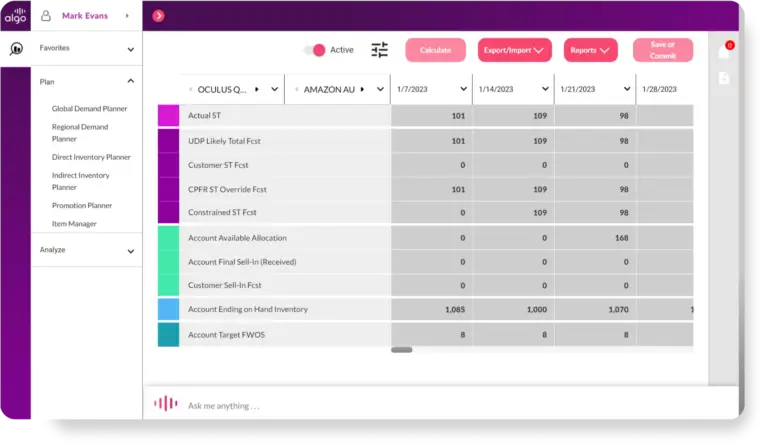
Algo centralized data across 1st party retailer sales and 3rd party OEM sales. The data is pivotal to an AI driven supply chain planning platform used for the purposes of optimizing sales to the consumer without excess inventory within the supply chain. Algo introduced essential capabilities including aggregation of
retailer data, co-managed inventory, collaboration, and a global control tower to both sales and supply chain teams at Microsoft.
Key benefits included sales increase, reduction in weeks of supply, reduction in markdown exposure, and productivity improvements. Microsoft embraced the Algo solution, with the outcome being development of high-quality consumer demand data residing in 1 platform to enable the efficient flow of inventory from factory to consumer.
Microsoft’s results
By partnering with Algo to centralize retailer data and leverage an AI-powered supply chain platform, Microsoft significantly improved sales, reduced the time it takes to deliver products to stores (weeks of supply), and ensured their products were consistently available for purchase (increased shelf availability).

« Lorsque nous avons commencé à travailler avec Algo, nous espérions obtenir une meilleure visibilité sur ce qui se passait dans notre Supply Chain. Nous avons bénéficié d'une compréhension en temps réel, d'analyses, d'une détection des anomalies et, pour la première fois, d'une perspective prédictive. Algo n'a pas seulement écouté, mais a également pris en compte nos commentaires, compris nos difficultés et les a transformés en informations exploitables. Algo nous a aidés à transformer un problème en opportunité dans l'une des périodes les plus difficiles pour la Supply Chain à l'échelle mondiale. »
David Warrick
Ancien directeur général de la chaîne d'approvisionnement mondiale et responsable de l'innovation chez Microsoft

« Lorsque nous avons commencé à travailler avec Algo, nous espérions obtenir une meilleure visibilité sur ce qui se passait dans notre Supply Chain. Nous avons bénéficié d'une compréhension en temps réel, d'analyses, d'une détection des anomalies et, pour la première fois, d'une perspective prédictive. Algo n'a pas seulement écouté, mais a également pris en compte nos commentaires, compris nos difficultés et les a transformés en informations exploitables. Algo nous a aidés à transformer un problème en opportunité dans l'une des périodes les plus difficiles pour la Supply Chain à l'échelle mondiale. »
David Warrick
Ancien directeur général de la chaîne d'approvisionnement mondiale et responsable de l'innovation chez Microsoft
